
The Family’s Abandonment
Hansel and GretelThe family’s hunger turns a reluctant decision into two attempts to leave the children in the forest, before their return ends the crisis.
increasing Bearing strength in each event
 decreasing
Bearing strength in each eventdecreasingHunger at Home
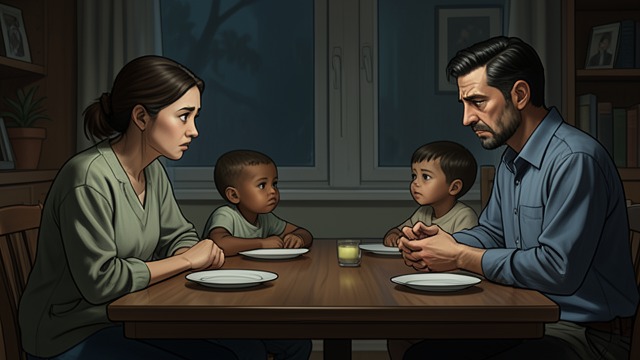
Hunger at Home
A household under strain
The Woodcutter’s family faces severe hunger. His children, Hansel and Gretel, depend on the adults for safety and food.
The crisis makes every meal uncertain. Poverty becomes more than hardship: it places the family’s bonds under pressure.
A proposed escape
The Stepmother argues that abandoning the children will spare the remaining adults from starvation. The Woodcutter resists, but her insistence weakens his resolve.
First Return
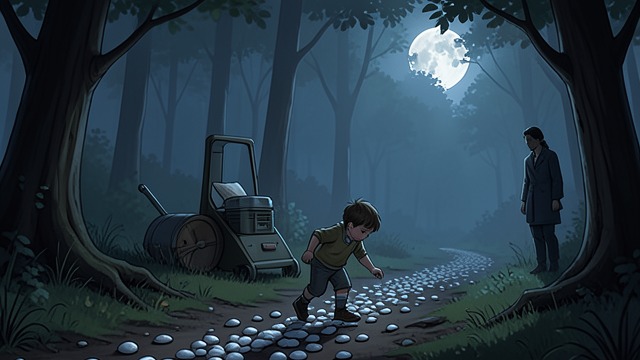
First Return
A path back
Hansel secretly gathers White Pebbles and leaves them along the route. Under moonlight, the markers guide the children home after their parents leave them in the forest.
The return exposes the limits of the adults’ plan. The Woodcutter welcomes the children, though the hunger that prompted the abandonment remains unresolved.
A reprieve, not a cure
The family lives together again for a short time. Their reunion offers relief without changing the conditions that caused the danger.
Final Homecoming
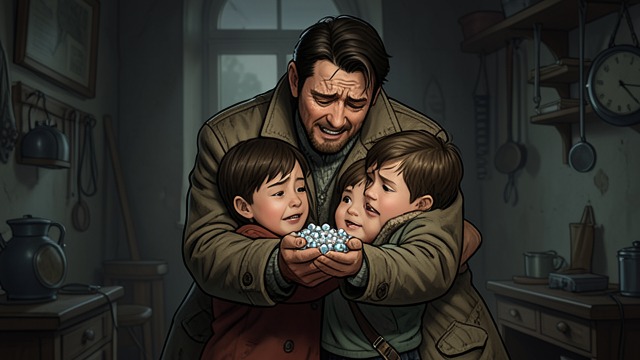
Final Homecoming
A changed return
After escaping the Witch’s house, Hansel and Gretel find their way back to their father. The Woodcutter greets them with joy and remorse.
The Stepmother is dead, and the children bring precious stones and pearls from the forest. Their arrival changes the family’s material future.
A resolved crisis
The children’s return reunites the surviving family and ends the immediate threat of hunger. Their safety now rests on both reconciliation and newfound wealth.
early in the story
after the first forest abandonment
near the ending
